Skip to content
Why Cheap Injection Molds Look the Same — But Cost More in Pipe Fitting Production
Many customers try to save $2,000 by choosing a cheaper injection mold, but end up losing $20,000 in pipe fitting production later.
The problem is not the price — it’s that the real cost of the mold is often overlooked.
Why do many people choose cheaper molds?
High Initial Investment in Pipe Fitting Production
For small factories or companies starting pipe fitting production for the first time, molds is a not small investment.
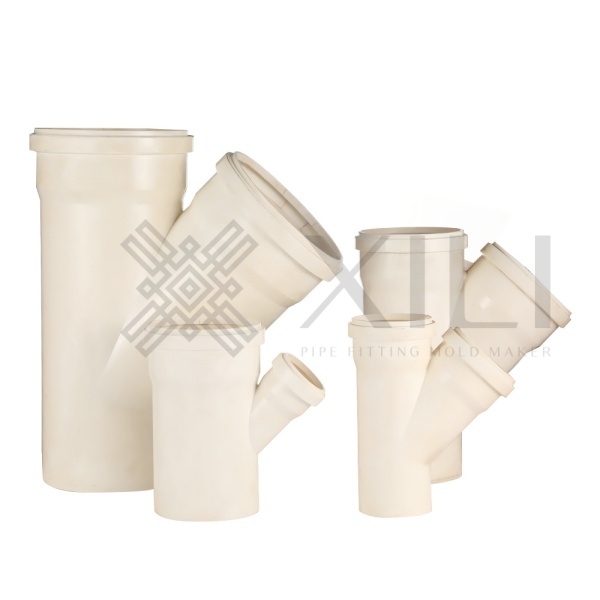
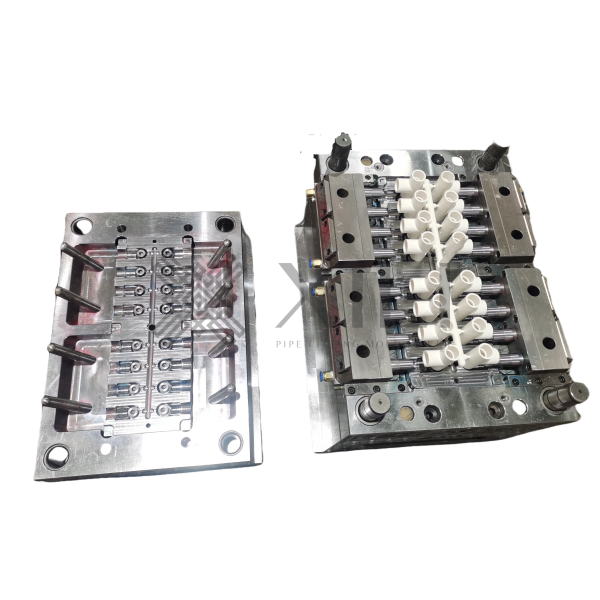
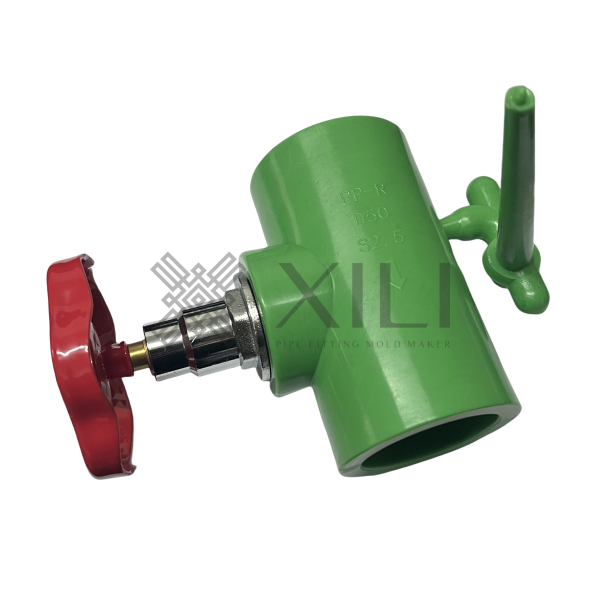
Taking PPR pipe fittings as an example, from 20mm to 63mm, from basic socket, elbow, tee to double elbow with brass inserts, it is easy to end up with dozens or even hundreds sets of molds.
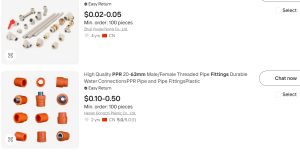
Even if each mold differs by only a few hundred dollars, the total difference becomes quite substantial.
Highly Competitive Pipe Fitting Market
The plastic pipe fitting market is highly competitive. For new entrants, they have little advantage in the selling price. So many tend to focus on reducing procurement cost, especially when selecting injection molds.
Molds Look Similar at First Glance
When comparing multiple mold suppliers, the price differa lot.
But samples and videos often look similar, which makes it difficult to judge the real difference in mold quality.
Hard to Understand Mold Structure Differences
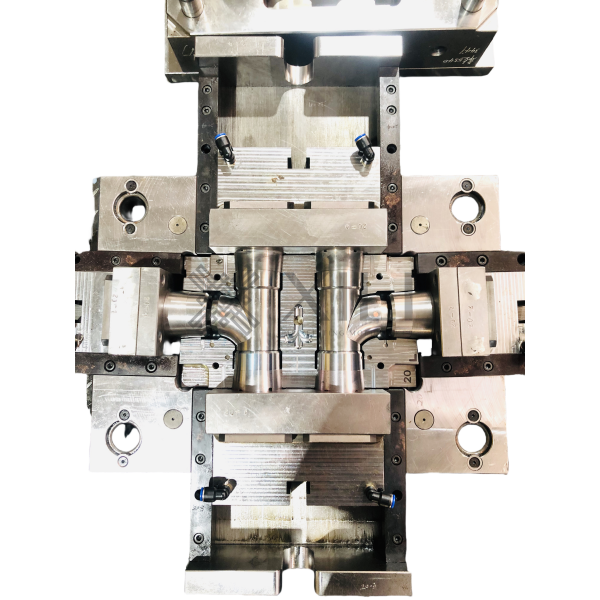
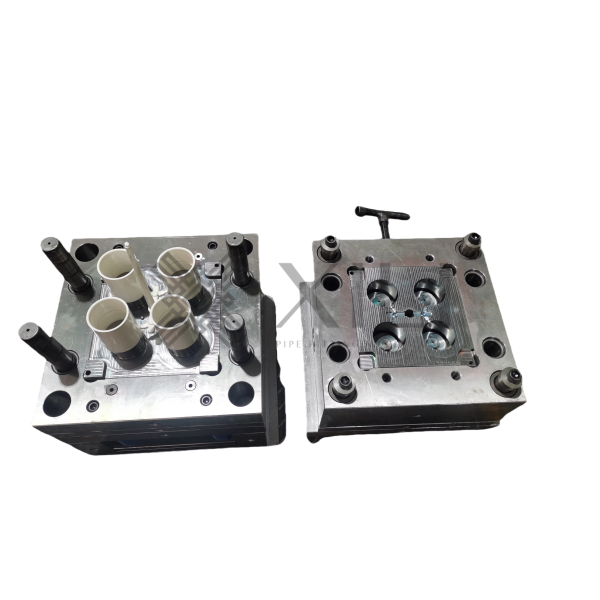
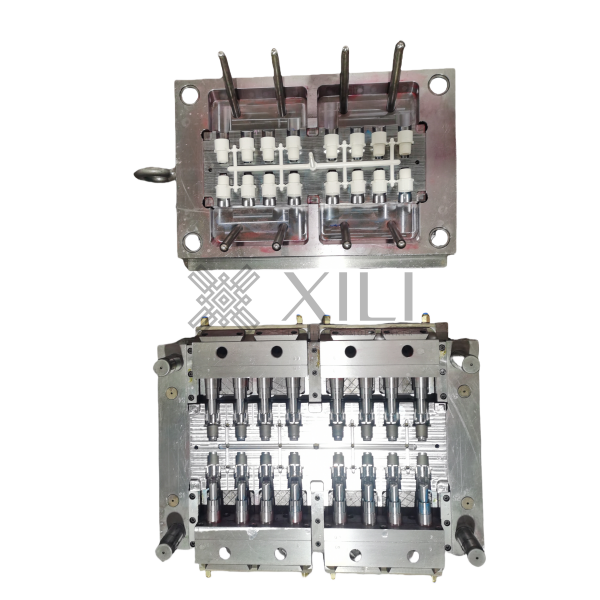
Mold structures may look similar on the surface.
But for non-professionals, it is not easy to understand where the actual design differences lie.
Low Appearance Requirement of Pipe Fittings
Not like other products like consumer goods, automotive parts, or electrical housings, plastic pipe fittings do not require a beautiful surface appearance.
Some manufacturers assume that the mold requirement is not very high, as long as the product can be produced.
Lack of Experience in Mold Evaluation
For first-time buyers of pipe fitting molds, there is often no clear understanding of mold materials, service life, or precision.
The comparison is usually based only on the parameters shown in quotations, without fully considering long-term mold performance.
What are the potential losses of choosing low-cost molds?
Higher Defect Rate and Material Waste
Higher defect rate, material waste, and lower production efficiency in injection molding.
For example:
- Bad cooling → dimensional issues
- Poor mold precision → flash and burrs
- Core wear → failed inspection
- Poor venting → burn marks
These issues directly affect whether pipe fittings can be consistently accepted in the market over the long term.
Lower Production Efficiency and Output
For an injection molding factory, running machines means cost, and downtime means loss.
Poor cooling channel design will increase cycle time and reduce efficiency.
With the same machine and the same working hours, the output becomes noticeably lower.
Frequent downtime for mold repair.
No injection factory wants to see this problem.
In many cases, problems start to appear after only a few months of production, such as flash, ejector pin sticking or breaking, mold jamming, or damage to guiding components.
Higher maintenance and after-sales cost.
Some low-cost mold manufacturers use non-standard or lower-quality components, and rely more on manual fitting during assembly.
When parts need to be replaced later, standard replacement is often not possible. After one to two years of use, the mold may need to be replaced entirely, which increases cost.
How to identify a High-Quality Pipe Fitting Mold?
Mold Steel Selection
Good mold steel is the foundation.
We select the right mold steel material according to the product raw material, and different mold parts should follow different processing methods.
For PVC pipe fittings, this is especially important: PVC material is corrosive, corrosion-resisctant steel is required like 1.2316, 4Cr13, and some molds parts require heat treatment for better performance.
Besides, PVC injection involves relatively high pressure, and low-quality steel makes it difficult to ensure a long mold service life.
Professional Mold Design
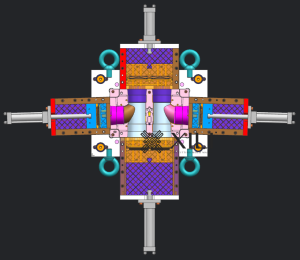
A reliable mold supplier does not only focus on whether the product can be made, but also considers practical factors such as cooling channel design, ease of operation, safety, and maintenance.
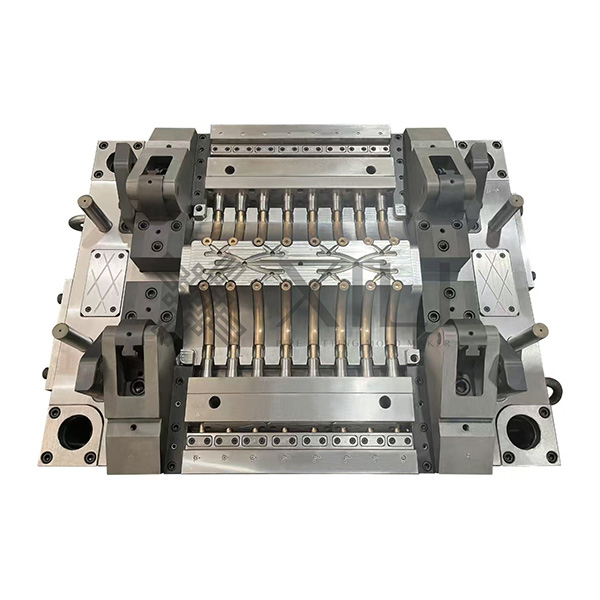
We can find there are a lot of bends, curves, and threaded structures in pipe fittings, the core-pulling system is critical.
We use various ingenious core-pulling structures, also we need to consider wear resistance (to ensure smooth operation after hundreds of thousands of cycles), cooling performance, and the shrinkage differences between materials such as PPR, PVC, and PE.
This is why it is important to work with a supplier who has solid experience in pipe fitting molds.
In addition, a well-managed mold manufacturer will strictly follow drawings. If a component is damaged, it can be reproduced quickly and replaced directly without affecting production.
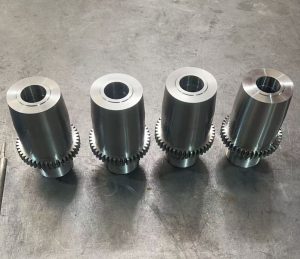
Quality Mold Components
Components such as guide pins, bushings, ejectors, and springs connect the entire mold system and support every opening and closing cycle.
Using low-quality components can lead to frequent failure and difficulty in replacement.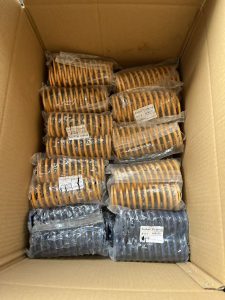
Pre-sales and After-sales Support
Pre-sales communication determines whether the mold can meet actual production requirements, including product details, modification needs, delivery time, production output, and machine compatibility.
After-sales service is also important. For any factory, when problems occur, being able to quickly reach someone who understands the mold and the process makes a significant difference.
Final Thought
The price of a mold is paid once.
But the impact of that mold is experienced every day in production.